2026 Section 179
The 2026 Section 179 deduction limit is $2,560,000 (for tax years beginning in 2026). Section 179 lets businesses deduct the full purchase price of qualifying equipment and software in the year it’s placed in service, rather than depreciating it over several years. This guide covers the full 2026 rules — dollar limits and phase-outs, vehicle caps, qualifying property, and how Section 179 combines with bonus depreciation.
What Is Section 179 (and Why Does It Matter in 2026)?
Section 179 of the Internal Revenue Code empowers businesses to deduct the full purchase price of qualifying equipment and software in the same tax year they’re put into service. Instead of stretching depreciation across several years, you can claim the entire cost upfront—dramatically improving your cash flow and creating immediate tax benefits.
Why Section 179 Matters for Your Business
Immediate Tax Impact: Rather than waiting years for depreciation benefits, claim the deduction in 2026
Enhanced Cash Flow: Keep more working capital in your business when you need it most
Strategic Growth: Upgrade equipment sooner and maintain competitive advantages in your market
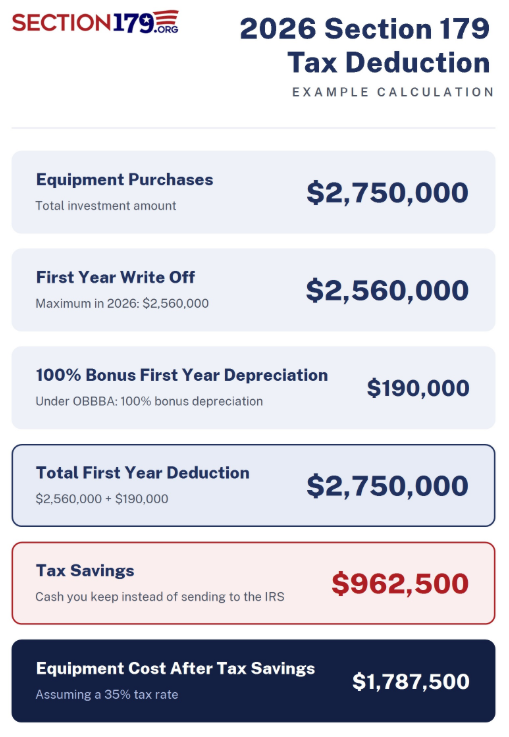
How the 2026 Deduction Limits and Phase‐Out Threshold Work
What Is the Maximum Section 179 Deduction for 2026?
For tax years beginning in 2026, businesses can elect to expense up to $2,560,000 of qualifying purchases. This is the maximum total Section 179 amount you can write off, subject to the taxable income limitation and the phase-out rules below.
Placed in service during the tax year you’re claiming the deduction
Used for business purposes more than 50% of the time
Qualifies under IRS guidelines
Spending Cap and Phase-Out Rules
The Section 179 deduction begins to phase out when the total cost of qualifying property placed in service exceeds $4,090,000:
Phase-out begins: above $4,090,000 of total qualifying property placed in service
Dollar-for-dollar reduction: the $2,560,000 limit is reduced by the amount over $4,090,000
Fully phased out: at $6,650,000
After Section 179: remaining basis may still qualify for bonus depreciation (if eligible)
How Do Carryover & Limitations Work?
Your Section 179 deduction cannot exceed your business’s net taxable income. However, if your Section 179 election exceeds your taxable business income in a given year, you can choose a partial Section 179 election. Any unused portion of the deduction carries forward to subsequent tax years, allowing you to apply it once you have sufficient income. This means if you can’t fully utilize Section 179 in the current year, you retain the remaining deduction for future use—ensuring you never lose the benefit.